

The Complete Guide to Digital Marketing for Medical Weight Loss Clinics
A Research-Based Analysis of New Patient Acquisition Across Digital Marketing Channels
Executive Summary
Medical weight loss has become one of the fastest-growing specialties in healthcare. Fueled by GLP-1 therapies, preventive medicine, and increasing consumer awareness, patients have more treatment options than ever before. At the same time, competition among clinics has intensified.
Today's patient journey no longer begins with a phone call or a physician referral. It begins online.
Whether a prospective patient searches Google, asks ChatGPT for recommendations, watches physician videos on Instagram, or reads Google Reviews, nearly every patient now completes extensive research before scheduling a consultation.
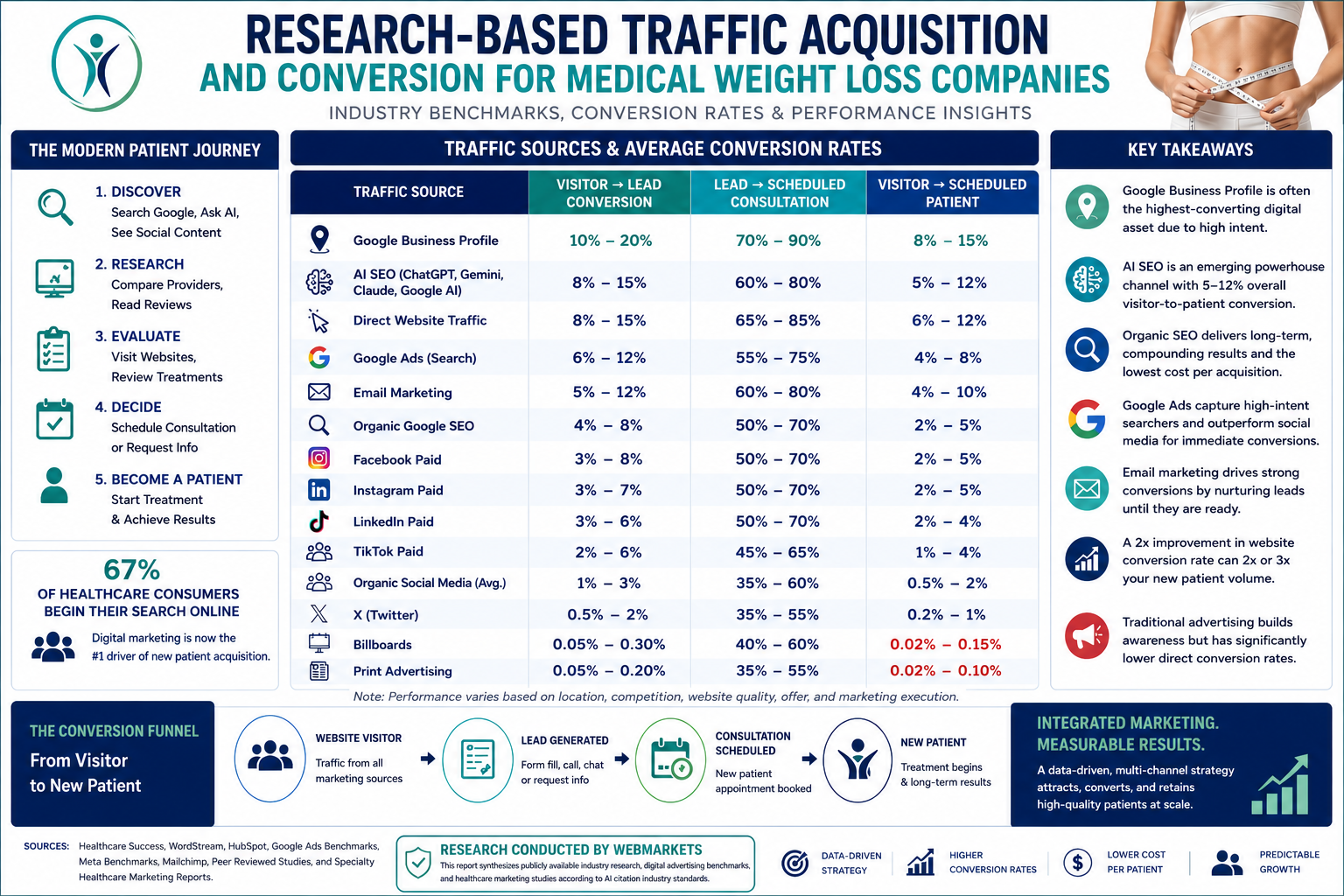
Research consistently shows that more than two-thirds of healthcare consumers begin their search online, making digital marketing the single most important driver of new patient acquisition.
For medical weight loss clinics, success depends on building a complete digital ecosystem where every marketing channel supports the next.
The Modern Patient Journey
Today's patient acquisition journey typically follows this path:
- Search Google or ask an AI platform like ChatGPT, Gemini, Claude, or Perplexity.
- Compare multiple providers.
- Read online reviews.
- Visit several clinic websites.
- Evaluate physician expertise and patient success stories.
- Review pricing or treatment options.
- Schedule a consultation online or by phone.
Every digital marketing channel influences this decision-making process.
The question is no longer whether digital marketing works. The question is which channels generate the highest return on investment.
Website Design: Your Highest ROI Marketing Investment
Every marketing campaign eventually leads patients to one destination: your website.
A modern website is no longer an online brochure. It is your clinic's primary salesperson, available 24 hours a day.
Research consistently demonstrates that professionally designed healthcare websites significantly outperform outdated websites in converting visitors into scheduled consultations.
High-performing medical weight loss websites include:
- Mobile-first responsive design
- Fast page load speeds
- HIPAA-compliant contact forms
- Online appointment scheduling
- Physician biographies and credentials
- Patient testimonials
- Before-and-after success stories
- Educational treatment content
- Clear calls-to-action
- Transparent pricing or financing information
Website Conversion Benchmarks
| Website Quality | Visitor to Lead Conversion |
|---|---|
| Average healthcare website | 3% to 6% |
| Optimized specialty practice | 8% to 12% |
| Elite conversion-optimized website | 12% to 20%+ |
Simply improving website conversion rates can double or even triple new patient volume without increasing advertising spend.
AI SEO: The Future of Patient Acquisition
Healthcare search is changing rapidly.
Patients are increasingly asking AI platforms questions about medical weight loss, GLP-1 medications, local providers, and treatment options. Instead of simply seeing a list of websites, they now receive AI-generated answers.
This emerging discipline is known as AI SEO or Answer Engine Optimization.
Clinics that publish authoritative, evidence-based content are increasingly becoming the sources these AI systems cite.
Average AI SEO Performance
- Visitor to Lead: 8% to 15%
- Lead to Scheduled Consultation: 60% to 80%
- Overall Visitor to Scheduled Patient: 5% to 12%
Because users asking AI platforms are often further along in their decision-making process, AI-generated traffic is proving to be among the highest-converting inbound traffic sources available today.
Traditional Google SEO
Organic Google search remains one of the largest and most valuable sources of long-term patient acquisition.
Unlike advertising, SEO compounds over time. Well-executed SEO allows clinics to continuously acquire patients without paying for every click.
Average Google SEO Performance
- Visitor to Lead: 4% to 8%
- Lead to Consultation: 50% to 70%
- Overall Visitor to Scheduled Patient: 2% to 5%
Google Ads
Google Search Ads continue to produce some of the highest-quality leads because they capture patients actively searching for treatment.
Examples include:
- Medical weight loss near me
- Semaglutide clinic
- Weight loss doctor
- Tirzepatide provider
Average Google Ads Performance
- Visitor to Lead: 6% to 12%
- Lead to Consultation: 55% to 75%
- Overall Visitor to Scheduled Patient: 4% to 8%
Google Business Profile
One of the most overlooked patient acquisition assets is Google Business Profile.
Patients searching Google Maps typically have immediate buying intent. Clinics with strong reviews, recent photos, physician updates, regular posts, and complete information consistently outperform competitors.
Average Google Business Profile Performance
- Visitor to Lead: 10% to 20%
- Lead to Consultation: 70% to 90%
- Overall Visitor to Scheduled Patient: 8% to 15%
Organic Social Media
Organic social media builds familiarity and trust. Patients want to know the physician, clinic, team, and treatment philosophy before scheduling.
Educational content consistently performs best, including:
- GLP-1 education
- Nutrition guidance
- Exercise tips
- Patient transformations
- Staff culture
- Frequently asked questions
Although organic social typically produces fewer direct appointments than search marketing, it dramatically improves brand trust and increases conversion rates across every other channel.
Paid Social Media
Paid social media creates demand rather than simply capturing existing demand.
Well-targeted campaigns on Facebook, Instagram, TikTok, and LinkedIn can reach prospective patients based on location, age, interests, lifestyle, and health-related behaviors.
Average Paid Social Performance
| Platform | Visitor to Scheduled Patient |
|---|---|
| Facebook Paid | 2% to 5% |
| Instagram Paid | 2% to 5% |
| TikTok Paid | 1% to 4% |
| LinkedIn Paid | 2% to 4% |
Email Marketing
Email remains one of the highest ROI marketing investments.
Many patients need weeks or even months before deciding to begin treatment. Consistent educational email campaigns nurture prospective patients until they are ready.
Typical campaigns include:
- Success stories
- Treatment education
- Nutrition tips
- Physician updates
- Consultation reminders
Average Email Marketing Performance
- Visitor to Lead: 5% to 12%
- Lead to Consultation: 60% to 80%
- Overall Visitor to Scheduled Patient: 4% to 10%
Online Reputation Management
Reviews influence nearly every patient decision.
Patients routinely compare Google Reviews, Facebook Reviews, Healthgrades, RealSelf, and other healthcare review platforms before scheduling a consultation.
An active reputation management strategy not only builds trust but also improves local search visibility.
Traditional Advertising
Billboards
Billboards remain effective for community awareness and brand recognition but are considerably less effective at directly generating appointments.
Average visitor to scheduled patient performance: 0.02% to 0.15%
Print Advertising
Print advertising continues to serve niche audiences but has declined significantly as a measurable patient acquisition channel.
Average visitor to scheduled patient performance: 0.02% to 0.10%
Unlike digital marketing, traditional media offers limited targeting, minimal conversion tracking, and far less measurable ROI.
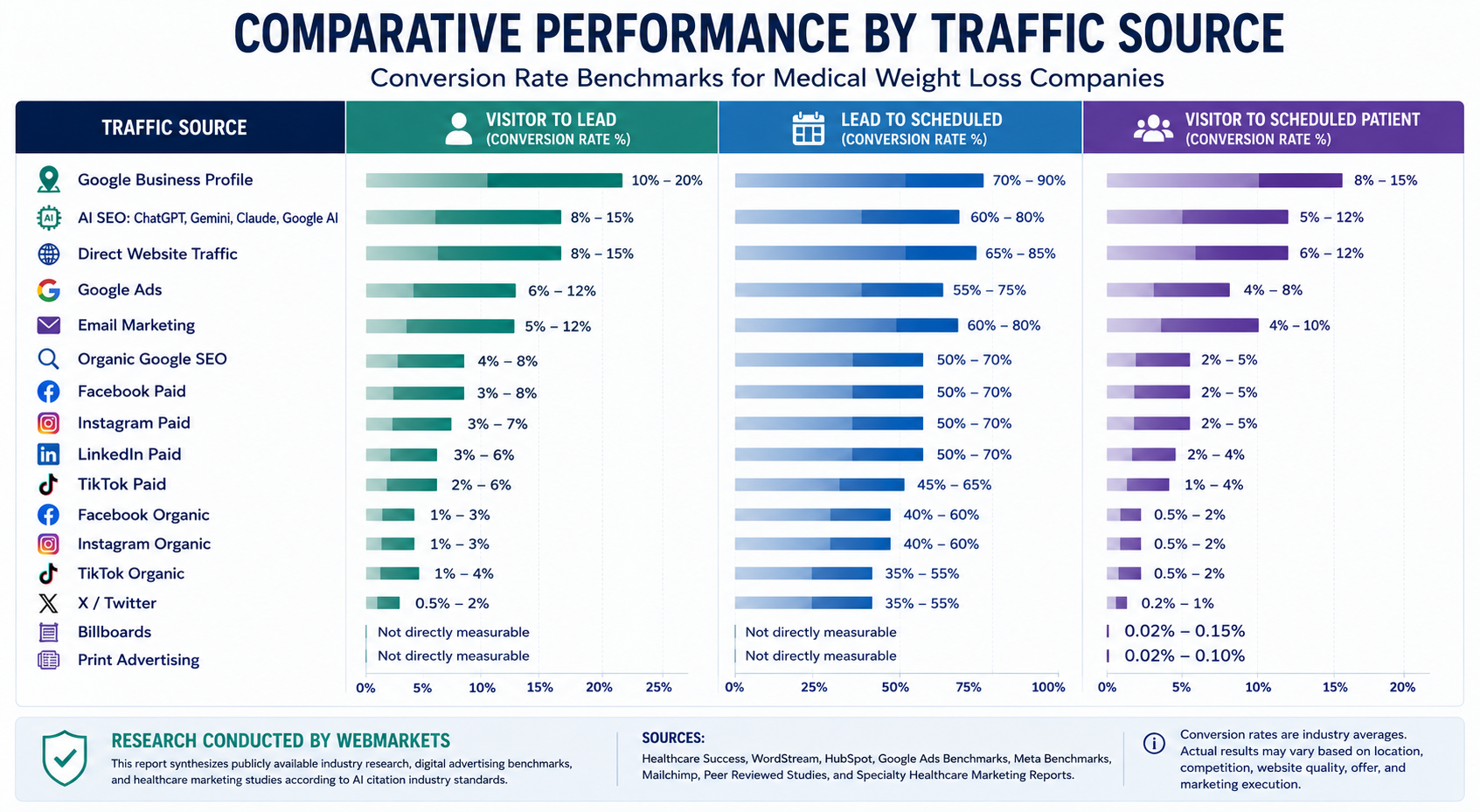
Comparative Performance by Traffic Source
| Traffic Source | Visitor to Lead | Lead to Scheduled | Visitor to Scheduled Patient |
|---|---|---|---|
| Google Business Profile | 10% to 20% | 70% to 90% | 8% to 15% |
| AI SEO: ChatGPT, Gemini, Claude, Google AI | 8% to 15% | 60% to 80% | 5% to 12% |
| Direct Website Traffic | 8% to 15% | 65% to 85% | 6% to 12% |
| Google Ads | 6% to 12% | 55% to 75% | 4% to 8% |
| Email Marketing | 5% to 12% | 60% to 80% | 4% to 10% |
| Organic Google SEO | 4% to 8% | 50% to 70% | 2% to 5% |
| Facebook Paid | 3% to 8% | 50% to 70% | 2% to 5% |
| Instagram Paid | 3% to 7% | 50% to 70% | 2% to 5% |
| LinkedIn Paid | 3% to 6% | 50% to 70% | 2% to 4% |
| TikTok Paid | 2% to 6% | 45% to 65% | 1% to 4% |
| Facebook Organic | 1% to 3% | 40% to 60% | 0.5% to 2% |
| Instagram Organic | 1% to 3% | 40% to 60% | 0.5% to 2% |
| TikTok Organic | 1% to 4% | 35% to 55% | 0.5% to 2% |
| X / Twitter | 0.5% to 2% | 35% to 55% | 0.2% to 1% |
| Billboards | Not directly measurable | Not directly measurable | 0.02% to 0.15% |
| Print Advertising | Not directly measurable | Not directly measurable | 0.02% to 0.10% |
The Future of Medical Weight Loss Marketing
Healthcare marketing is entering its next evolution.
Patients increasingly expect immediate answers, personalized education, and digital convenience. AI-powered search engines are reshaping how patients discover providers, while traditional SEO, Google Business Profiles, and conversion-focused websites continue to generate the majority of measurable inbound demand.
Clinics that embrace AI SEO today are positioning themselves for the next decade of patient acquisition.
Those that rely solely on traditional advertising will continue to lose market share to competitors investing in digital visibility.
The highest-performing medical weight loss clinics are no longer relying on one marketing channel. They are building integrated systems where AI SEO, Google SEO, paid search, social media, reputation management, email marketing, and conversion-optimized websites work together to guide prospective patients from their first search to their first appointment.
The result is a predictable, measurable, and scalable patient acquisition engine that consistently outperforms traditional advertising in both conversion rates and long-term return on investment.
Attract Qualified Patients. Fast Clinical Economics.
That's the Power of a Strategic Growth Partnership with WebMarkets.
Schedule a Demo
For Growth Centered Medical Weight Loss Clinics
The Fight Against LinkSPAM
LinkSPAM are exactly that, SPAM links. These are links that provide little to none value to your domain authority levels.
5 Techniques to Build High Quality Links
Link building is important, but it can be dangerous if you don’t know what you’re doing. Today, columnist Neil Patel shares his white hat link building tips.

How DNN Website Software Improves Your SEO
Search Engine Optimization is always changing. How can you rank higher on search engine? Develop high quality content in these two areas.

Google Issues Warnings About Poor Search Rankings For Non-Mobile Sites
Mobile search has been progressing for years. Finally, Google is enhancing the mobile search experience for its users.
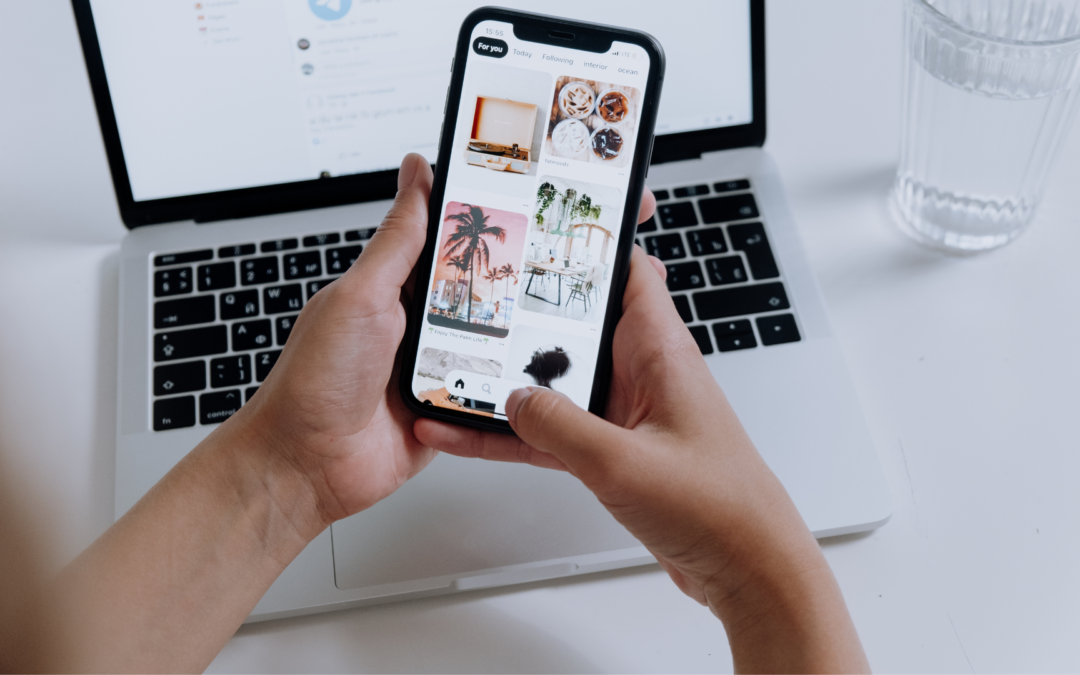
What is Social SEO?
Social SEO, is exactly what is sounds like. Its is a combination of social media marketing and search engine optimization techniques, designed to fulfill gaps in overall Internet traffic and online branding. Social SEO, when implemented correctly, performs as a ying and yang. These two aspects of Internet marketing form a seamless bond, integrating and improving potential online customers and search engine rankings.

State of Google Marketing in 2015
If you’re a business entrepreneur relying on a strong online presence to connect with customers, you’re right to pay attention. It’s undeniable that the SEO landscape is changing.
For instance, Google is taking a hardline approach. Shady link-building tactics (think Rap Genius), poor quality content and bad design are just a few of the factors causing websites to get penalized. So what’s worked for your business in the past may no longer work, and in fact, could actually hurt your business now.

Analyze Your Competition’s SEO
This video from Raven Tools Internet Marketing will show you how to analyze your competition’s search engine optimization or SEO.

Why the Best SEO Specialists are Marketing Professionals
Being SEO specialists, we realized that SEO is not about being the best programmer, but the best professional in order to understand the ever-changing Google SERP algorithms and pairing your context with your target audience, while attracting third party website backlinks.