

If you have noticed fewer clicks reaching your website even though your rankings look fine, generative engine optimization is likely the reason. WebMarkets has been closely tracking this shift, and it is changing how people find businesses online.
What Is Generative Engine Optimization
Generative engine optimization, or GEO, is the practice of structuring your content so AI platforms like ChatGPT, Google AI Overviews, Perplexity, and Copilot can find it, understand it, and cite it in their answers. Instead of ranking among ten blue links, your goal becomes earning one of the handful of sources an AI model references when it answers a question.
This is a real shift in how people discover businesses. A user searching for “best plumber near me” used to scroll through search results. Now they might ask an AI assistant directly and get a short, direct answer with two or three sources named. If your business is not one of those sources, you are invisible in that moment, even if your SEO foundation looks strong on paper.
How GEO Is Different From Traditional SEO
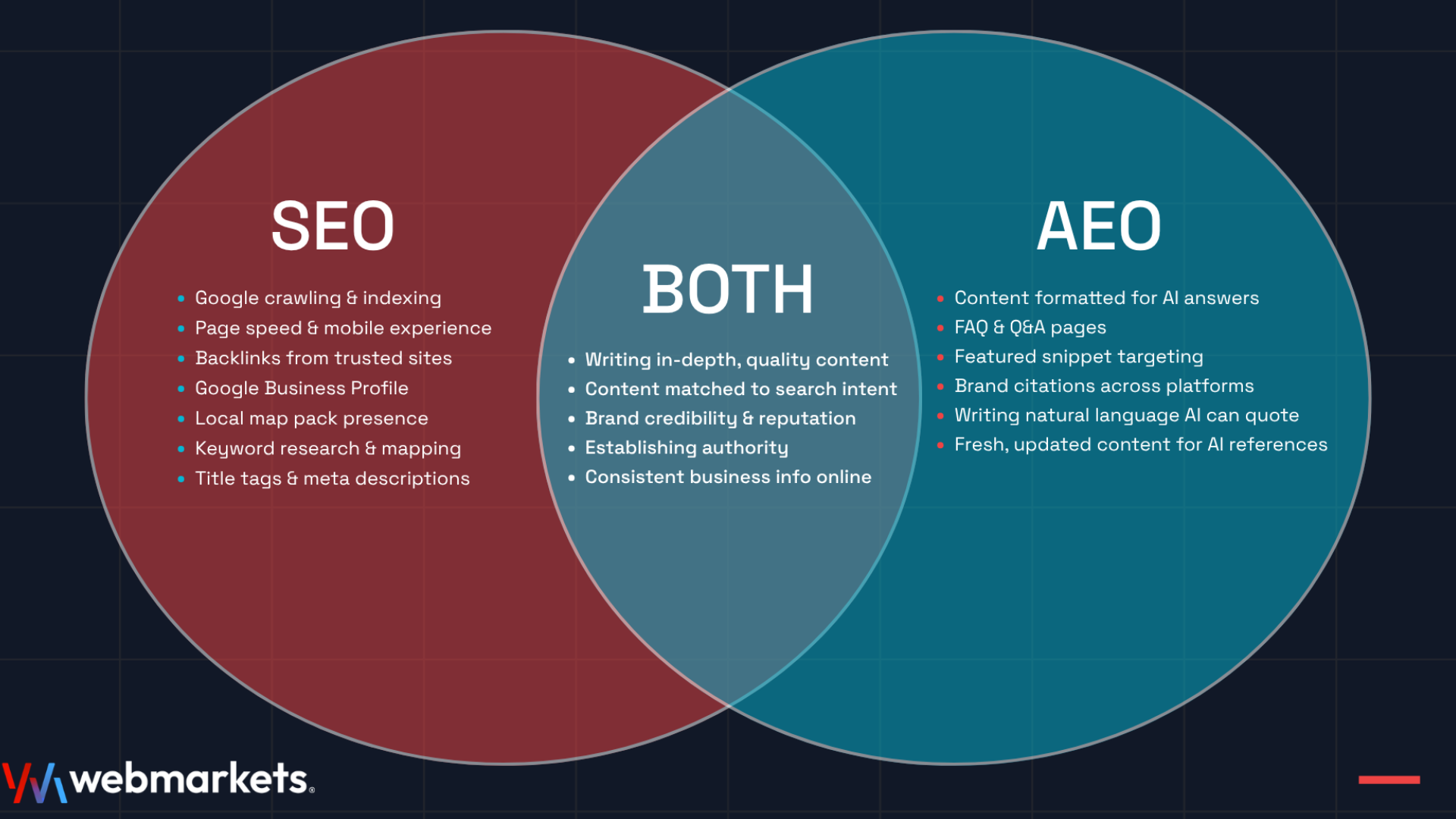
Traditional SEO focuses on keywords, backlinks, and page rank to earn a spot on the results page. GEO focuses on something different: making your content easy for an AI model to retrieve, trust, and quote.
A few key differences stand out:
- Goal: Traditional SEO aims for a click. GEO aims for a citation or mention, even if the user never visits your site.
- Ranking factors: Search engines use backlinks and page authority. AI engines weigh clarity, factual accuracy, and how well your content answers a specific question.
- Content structure: SEO favors keyword density and page length. GEO favors clear, direct answers that an AI model can lift and summarize.
- Success metric: SEO tracks rankings and organic traffic. GEO tracks brand mentions and citations across AI platforms.
Both approaches still matter. A site with strong technical SEO gives AI models an easier path to crawl and understand your content in the first place, and a clear strategy ties the two together instead of treating them as separate projects.
How to Structure Your Content So AI Engines Cite You
AI models are more likely to pull from content that answers questions clearly and demonstrates real expertise. A few practical steps help:
Answer the Question First
Open each page or article with a direct answer to the question in the title or heading. AI models often pull the first clear answer they find rather than searching through several paragraphs of buildup.
Use Clear Structure
Break content into headings, short paragraphs, and bullet points. This makes it easier for AI systems to parse and extract the exact piece of information they need. A well-built site through web development makes this structure easier to maintain across every page.
Add Original Information
Generic content that repeats what is already online rarely gets cited. Original data, case studies, or creative that showcases real work gives AI models a reason to reference your business specifically instead of a competitor.
Cover the Full Topic
AI models tend to favor sources that address a subject thoroughly rather than those that skim the surface. Building out related subtopics on your site signals topical authority, something AI automation can help you scale without sacrificing quality.
Why This Matters for Your Business Now
AI search adoption is no longer experimental. More people are forming habits around which AI platform they use for research and recommendations, similar to how they once chose between search engines. Businesses that wait to adapt risk becoming invisible in an increasingly common way people search for services.
The businesses moving on this now are building an advantage that will be harder to catch up to later, since AI models tend to keep citing sources they already trust and recognize. Tracking that progress through analytics is how you know the work is actually paying off.
Get Started With WebMarkets
WebMarkets helps businesses build the technical foundation and content strategy needed to show up in AI-powered search, not just in traditional rankings. Reach out to WebMarkets today to find out where your business currently stands and what it takes to get cited by the platforms your customers are already using.